

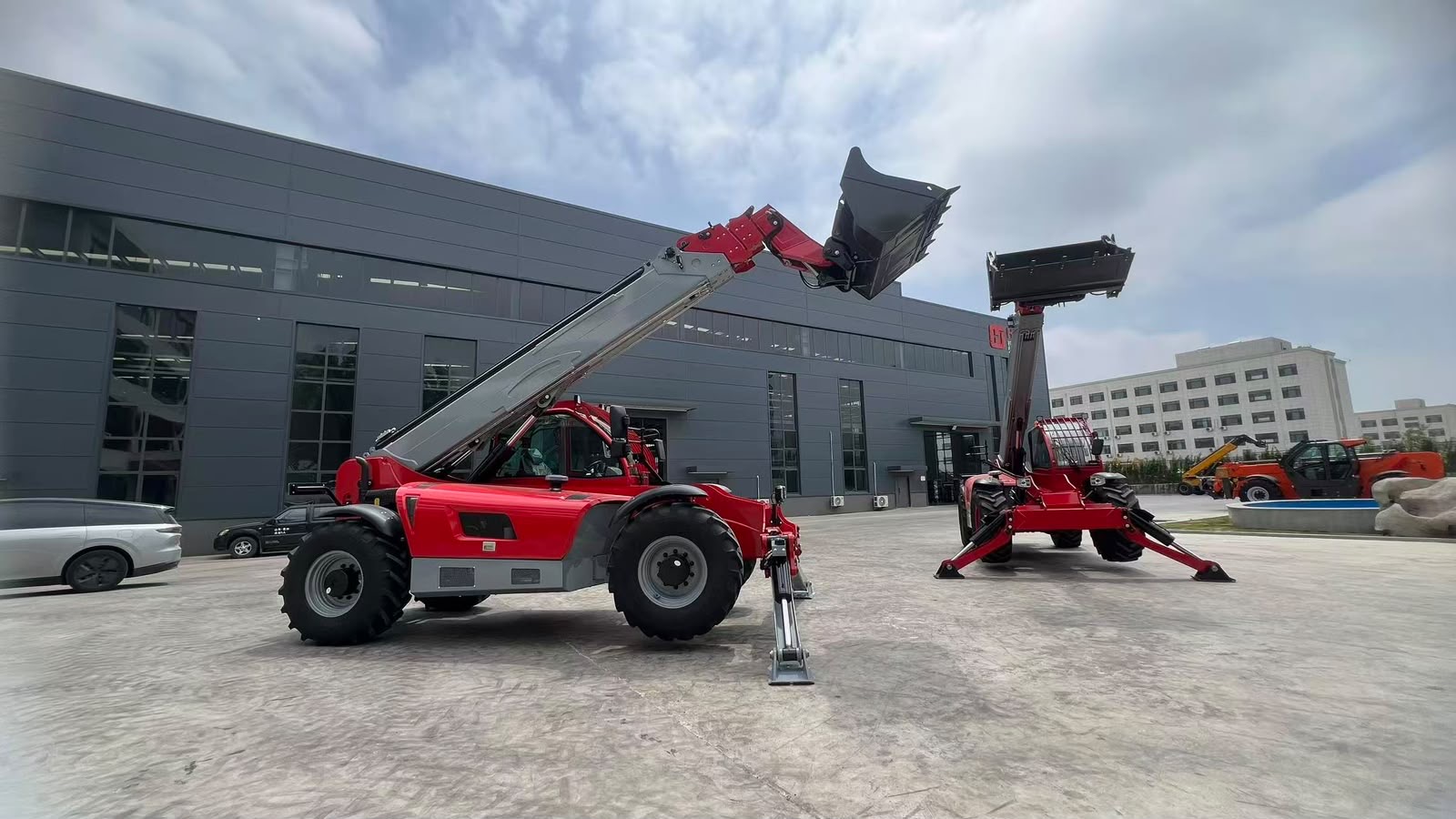
Telehandlers are used to lift, carry and place materials in construction, agriculture and other outdoor handling applications. Their extending boom reaches upwards and forwards, helping position loads beyond the point a conventional forklift can approach. With approved attachments, they can also handle tasks such as moving bales or loading loose materials.
For a business managing several material handling jobs across a site, that combination can be valuable. A telehandler can unload suitable deliveries, move materials into a staging area and place them closer to the work. EnduroLift lists telehandlers alongside diesel and electric forklifts on the published range, backed by Forklift Handling support.
Choosing the right machine starts with the jobs you need to complete and the places your loads need to reach.
What makes a telehandler useful?
A telehandler, short for telescopic handler, carries forks or another attachment at the end of a telescopic boom. Raising and extending the boom creates a working area that combines height with forward reach.
The practical benefit is placement. The machine can stand back from an obstruction and still reach an approved landing point. That can help where a truck cannot park directly beside the work or where materials need to move from ground level to an elevated position. Reach must always be read alongside capacity. The farther a load sits from the machine, the more demanding the lift can become. The model-specific load chart sets out the permitted load for the working position and configuration.
What are telehandlers used for in construction?
Construction sites bring together changing access, deliveries and work at different heights. Telehandlers are useful for moving suitable loads between these areas and placing materials where the next stage of work needs them.
Supplying materials to elevated work areas
A telehandler can place suitable palletised materials at an elevated landing point within its approved capacity. Bricks, blocks and packaged building supplies are familiar examples. The landing area must also be suitable for receiving and supporting the load. Bringing a complete pallet closer to the work can reduce the need to move individual items repeatedly from ground level. The benefit comes from matching the delivery point to the task, rather than simply choosing the machine with the tallest boom.
Unloading and staging deliveries
Telehandlers can unload suitable vehicles and distribute materials to staging areas. Forward reach may help when access is available from only one side of a delivery, provided the load and distance remain within the approved chart.
For a site manager, this links delivery planning with material placement. Deciding where loads will be received and where they will go next helps avoid repeated handling after a truck has left.
Reaching beyond site obstructions
Walls, structures and restricted access can prevent a conventional forklift from approaching the final placement point. A telehandler's boom may bridge that gap. The machine still needs a suitable supported working position, clearances and capacity for the required reach.
For example, materials placed beyond a low barrier may demand more horizontal outreach than vertical height. Supplying both measurements gives the equipment provider a clearer description of the job.
How are telehandlers used in agriculture?
Agricultural work often combines lifting, loading and the movement of different materials. Telehandlers can support these tasks with suitable attachments, making them useful around farmyards, stores and loading areas.
Handling and stacking bales
Approved bale attachments allow compatible machines to lift and position bales. The attachment needs to suit the type of bale and material, especially where wrapping needs to be protected. Access around stacks and the load's dimensions help determine the right configuration.
Loading feed and other loose materials
A suitable bucket can help a compatible telehandler move loose material such as feed or grain. Match bucket size to material density and the machine's approved capability: the same volume of two different materials can have very different weights.
This makes the attachment discussion as useful as the machine discussion. Describing what you move, how it is stored and where it must be deposited helps identify a practical combination.
Moving agricultural supplies
With suitable forks, a telehandler can handle supported loads such as bagged inputs, packaged feed or palletised supplies. Doorways, shed heights and working space around the storage area can be just as important as lifting capacity. If a farm alternates between bale handling and deliveries, list both tasks when comparing machines. A model that suits the heaviest load may still be too large for the buildings where the lighter loads are stored.
What are telehandlers used for in industrial yards and support work?
Telehandlers can assist with material placement in outdoor storage, industrial and construction-support environments. Typical tasks include handling suitable packaged materials, moving loads between work areas and reaching placement points beyond straightforward vehicle access.
In mining-support operations, for example, the requirement may be moving suitable materials around prepared surface work areas. The exact site conditions, load and equipment specification determine the fit. A general-purpose machine should not be assumed suitable for underground or hazardous-area work. The useful starting point is a list of real tasks. 'Industrial use' can mean anything from a paved maintenance yard to a demanding outdoor placement job, and those descriptions lead to different machine requirements.
What attachments can a telehandler use?
Approved attachments broaden the work a compatible telehandler can perform. The table shows common applications; availability and approval depend on the specific machine and attachment combination.
| Attachment | Typical application | Detail to match before choosing |
|---|---|---|
| Pallet forks | Moving and placing supported pallet loads | Load weight, dimensions and load centre |
| Bucket | Handling suitable loose materials | Material density, bucket capacity and approved use |
| Bale attachment | Handling bales | Bale type, size and wrapping requirements |
| Grab or grapple | Handling suitable irregular materials | Material shape and attachment compatibility |
| Lifting jib or hook | Approved suspended-load tasks | Attachment-specific chart, rigging and lift plan |
A machine that can switch between approved attachments may cover several jobs in a working day. That flexibility is most useful when the tasks are regular enough to justify the equipment and the attachment change fits the workflow. The connection alone does not prove compatibility. Attachment weight, load centre, hydraulic supply and capacity information all need to suit the machine. Check the approved combination when ordering, rather than treating attachments as interchangeable accessories.
Can a telehandler lift people?
Only a machine configured and permitted for personnel lifting, using the appropriate approved work platform, should be considered for that task. People must never be lifted on bare forks or an improvised pallet. Where access at height is the main job, compare a purpose-built access platform as part of the equipment selection. This is a different application from lifting materials. Mention it separately when discussing requirements so the equipment and operating arrangements can be assessed correctly.
How do you choose a telehandler for your work?
A good equipment brief describes the whole lift and the route to it. Five details make the comparison more useful.
1. The load and its dimensions
Provide the heaviest regular load and any larger or awkward loads you expect to handle. Include pallet or attachment requirements and the load's dimensions. A long load can create a different lifting demand from a compact load of the same weight.
2. The placement height and forward reach
Record both measurements. Maximum lift height is not the same as maximum outreach, and a machine may reach a location without having enough capacity to place your load there. Confirm the required load against the approved chart at that position.
3. Ground and setup conditions
Describe the surface, gradients, edges and space available for positioning. Four-wheel drive and rough-terrain tyres do not remove the need for adequate ground support. If the lift requires stabilisers, their support and deployment space form part of the plan.
4. Access and transport
Measure gates, doorways and restricted routes. Consider the machine's width, height, turning requirements and transport arrangements. A telehandler needs to get into the working area before its reach can help you.
5. Working hours, support and ownership cost
Compare how often the machine will work, how frequently attachments will change and what support the operation needs. The purchase or rental figure is one part of the decision; delivery, fuel, maintenance and parts also affect the overall cost. For a short project, ask about rental availability and the equipment needed for the complete job. For regular work, compare purchase options against the expected workload. Discuss service or parts support for existing equipment when keeping your current machine productive is the priority.
Frequently asked questions about telehandler uses
Can a telehandler replace a forklift?
It can complete some of the same pallet-handling tasks. A conventional forklift may fit repetitive indoor work better, while a telehandler becomes attractive when the job requires forward reach, outdoor capability or several approved attachments.
Can a telehandler be used as a loader?
A compatible telehandler with an approved bucket can handle suitable loose material. That does not mean every model is intended for excavation or the same duty cycle as a dedicated loader. Match the machine to the material and the work being planned.
Does a 4-tonne telehandler lift 4 tonnes at maximum reach?
Not necessarily. The rated capacity applies under specified conditions. Permitted load changes with reach, height, attachment and setup, so the chart for the exact configuration is the reference for the lift.
Do all telehandlers rotate?
No. Fixed-boom and rotating telehandlers have different designs. A rotating model can slew its upper structure within its operating limits, while a conventional fixed-boom model relies on positioning the machine and moving the boom. Choose the design that fits the placement task.
Put the right reach to work with EnduroLift
EnduroLift supplies telehandlers for agricultural, construction and mining applications, supported through Forklift Handling's nationwide network. Tell us what you move, where it needs to go and the conditions on your site.
Explore the EnduroLift range or request a tailored quote to discuss suitable equipment, rental requirements or support for your existing machine. Compare published telehandler specifications such as the ELA-4018D and ELA-5018D when reach and capacity matter.
Sources and further reading
- JCB: What is a telehandler?. Accessed 24 November 2026.
- Genie: What is a telehandler?. Accessed 24 November 2026.
- Genie: Interpreting a telehandler load chart. Accessed 24 November 2026.
- Bobcat: What does a telehandler do?. Accessed 24 November 2026.
- JLG: OEM approved attachments for your telehandler. Accessed 24 November 2026.
- EnduroLift range and support. Accessed 24 November 2026.
- Bobcat: Safety tips for operating telehandlers. Accessed 24 November 2026.
- JLG: Rotating telehandlers. Accessed 24 November 2026.